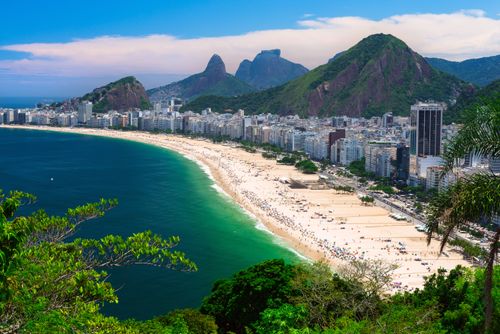
Ideal for combining a relaxing break with an itinerary of discovery, Rio de Janeiro is a stopover with a wide range of charms, and one to be chosen without hesitation if you are visiting Brazil for the first time. Since 1 July 2012, the city has been inscribed on UNESCO's World Heritage List in the "Urban Cultural Landscape" category. Nicknamed the Marvellous City, Rio de Janeiro is the first city to obtain the title in this category. Stay at a beachfront hotel in Copacabana: you'll be perfectly placed to enjoy the famous crescent of sand (which covers no less than 4 km), as well as to visit the city, day and night! The legendary Copacabana Palace is of course the most famous, but also the most expensive.
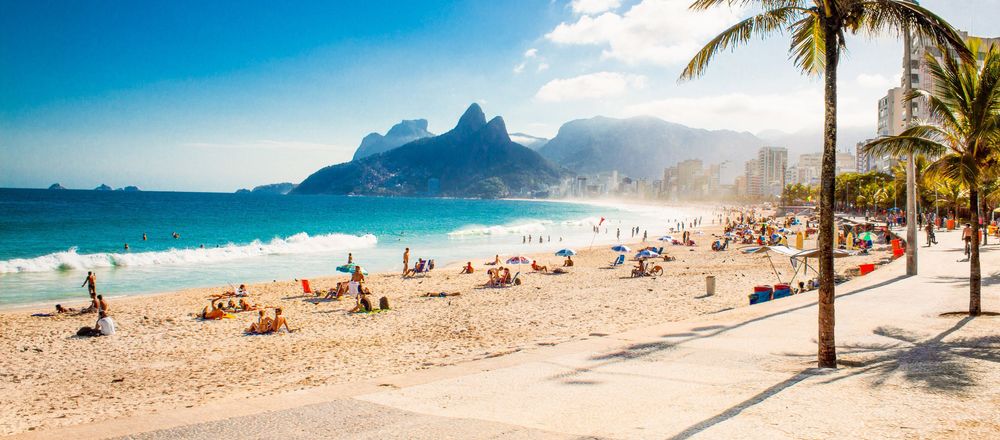
You can also opt for the seafront of Ipanema, Rio's chic district packed with boutiques, craft markets and souvenir shops. The cradle of Bossa Nova, Ipanema beach is more exclusive than Copacabana. On foot, by taxi (plentiful and inexpensive) or by bus, you can get everywhere, from the many beaches to the city centre. But take the metro: it's faster, easier and safer for tourists. You can also opt for an unforgettable helicopter flight over the city!
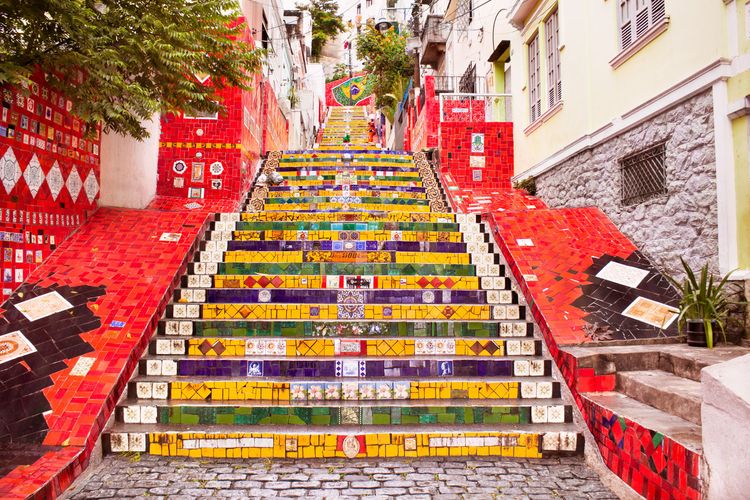
One of the must-do excursions in the city of Carioca is to take the cable car up to the famous Sugar Loaf (a peak rising to almost 400 m). You're guaranteed a magnificent view over Guanabara Bay, in the company of monkeys! And don't miss Corcovado, Rio's landmark, 700m above sea level in the north of the city. The famous statue of Christ the Redeemer is no less than 30 metres high. You can reach this monument by funicular. You can then explore Rio's historic centre. Finally, the tropical forest of the Tijuca Natural Park and the Santa Teresa district on the heights of the city (with its cobbled streets criss-crossed by trams and lined with little houses full of flowers) are well worth a visit. Once the city's most exclusive district in the 19th century, before the jetset migrated to Copacabana in the 1960s, this charming area is back in fashion with the opening of a number of pousadas by the French. A Relais et Châteaux hotel has just opened here. Located on the heights of Rio, the air is more breathable here than in Copacabana and Ipanema. In the evening, head to Lapa, Rio's trendy district. Built in the 1930s, this district with its many cabarets is a meeting place for samba orchestras and young Carioca in search of authenticity away from the touristy Copacabana.
What's on offer?
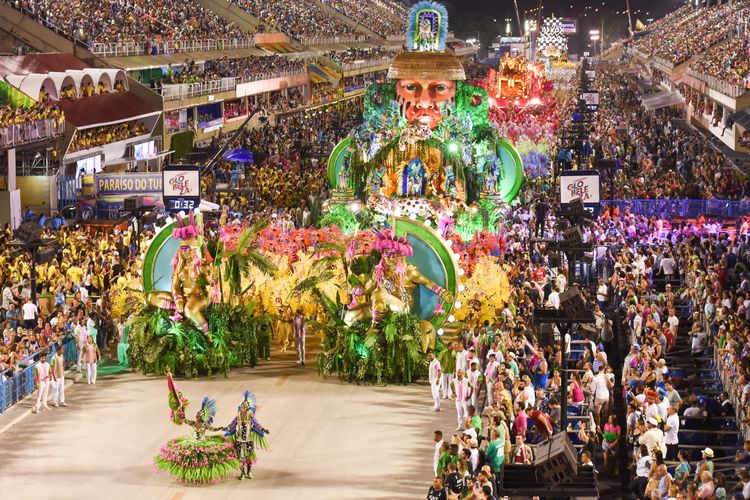
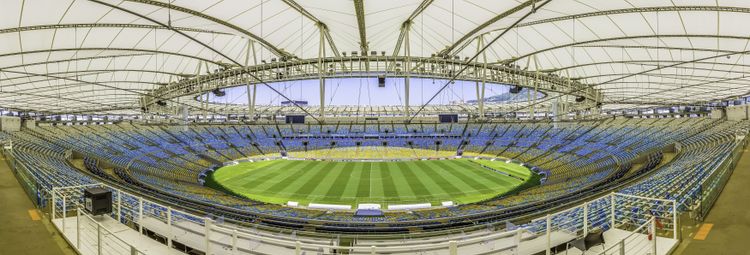
For football fans, attending a match at the legendary 97,000-seater Maracana stadium, the scene of Pele's exploits, is an unforgettable experience. Attend the Rio carnival for three days, 40 days before Easter, with the samba school parades at the Sambodrome. In the evening, head for the Rio Scenarium, the pavilion of culture, a superb three-storey building where you can listen to excellent Brazilian music in an authentic setting, in the heart of Lapa, Rio's trendy district. Built in the 1930s, this district with its many cabarets is a meeting place for samba bands and young carioca looking for authenticity far from the touristy Copacabana. You can also attend a folklore show at the Plataforma, a folklore show combining capoeira and samba where the performers wear incredible colourful costumes just like at carnival! Some agencies also offer tours of the favelas, giving you the chance to visit schools or craft centres and finance humanitarian projects. Discover a different image to that of violence and crime in these deprived neighbourhoods.
Don't forget to visit the sites for which the city is famous: Corcovado and the statue of Christ the Redeemer, Sugarloaf and the Maracanã stadium, built for the 1950 World Cup. Of course there are the mythical spots: Copacabana beach, a crescent 5km long! We prefer the more select beach of Ipanema, birthplace of Bossa Nova. Then get lost in the hills above Rio in the Santa Teresa district, with its steep cobbled streets lined with flower-filled houses and the traditional yellow trams. Once the city's most exclusive district in the 19th century, before the jetset migrated to Copacabana in the 1960s, this charming area is back in fashion with the opening of a number of pousadas by the French. A Relais et Châteaux hotel has just opened here. Located on the heights of Rio, the air is more breathable here than in Copacabana and Ipanema. To the south of Rio, the Green Coast is worth discovering, with the colonial city of Paraty and its 17th-century pousadas, and the Angra dos Rei archipelago, where the jungle-covered mountains sink into the sea. Of the 365 islands in the bay, Ilha Grande is undoubtedly the star! On the northern coastline, the Buzios peninsula is home to some superb pousadas.

 1
1